



















USE CASE · INDUSTRY

Procedure RAG: query your technical documentation in plain language

The right answer in seconds, sourced from your own documents

Routings, work instructions, machine sheets: the right information exists, but it can't be found when it's needed. An AI assistant reads all your documentation and answers your operators' questions in plain language, with the source cited.

The challenge

In most shops, knowledge is scattered: paper binders, PDFs on a server, Excel files, and above all the memory of a few veterans. Finding the right information at the right time often turns into a treasure hunt.

  • 01

    Documentation is scattered and inconsistent (paper, PDFs, intranet, experts' heads): no one knows for sure where the current version is.

  • 02

    Looking up a routing or an instruction takes minutes every time, multiplied by every operator and every day: productive time going up in smoke.

  • 03

    When an expert leaves or is absent, knowledge that was never written down goes with them: good practices get lost, the same mistakes come back.

  • 04

    An answer given from memory or taken from an old version is costly: scrap, rework, safety incidents, customer non-conformities.

How AI solves this problem

An AI assistant ingests all your technical documentation (routings, work instructions, machine sheets, incident history). Operators ask their question in plain language at their workstation and get a concise answer with the source cited (document, version, page). The AI answers only from your documents: if the information doesn't exist, it says so, it doesn't make things up.

The technical building blocks

Ingestion and chunking pipeline for your documents (PDF, Word, Excel, scans). Vector knowledge base. Sovereign language model (Mistral) delivering sourced answers, with no fabrication. Question interface at the workstation (PC, tablet, mobile). Access rights managed by profile. Sovereign or on-premise hosting.

The data used

Your routings and work instructions, machine sheets and manuals, quality and safety procedures, incident and maintenance history. PDF, Word, Excel or scans: existing documentation is enough, no need to rewrite everything.

Diagram of the AI documentation assistant (RAG): operator question, AI search, document base, sourced answer
  1. Operator question

  2. AI search

  3. Document base

  4. Sourced answer

Expected benefits

  • Answers in seconds.

    Operators get the right information at their workstation, without leaving the line or waiting for a colleague to be free.

  • Sourced, reliable answers.

    Every answer cites its source and version: no more instructions given from memory or taken from an outdated document.

  • Knowledge captured.

    Veterans' expertise is written down, structured and accessible to all: it no longer retires with them.

  • Faster skill-building.

    New hires find answers on their own: onboarding gets shorter and weighs less on the teams.

Why StratIA

  • Sovereignty.

    Your data stays in France, hosted with OVH or Scaleway, or even on-premise. Sovereign models (Mistral) when relevant. GDPR and AI Act compliance built in from the design stage.

  • French team.

    A French team dedicated to your project. Short cycles, weekly demos, continuous user validation. No offshoring, no black box.

  • Defined ROI.

    ROI is quantified from scoping, the scope is clear, go/no-go decisions are transparent. You know what you're paying and what you're gaining before you start.

They trust us

  • Accessite logo, a StratIA client
  • Hello Prépa logo, a StratIA client
  • Bastide Manutention logo, a StratIA client
  • Paymetrust logo, a StratIA client
  • Comité National Olympique et Sportif Français logo, a StratIA client
  • Union des Marchands de Biens logo, a StratIA client
  • Ordre des Géomètres-Experts logo, a StratIA client
  • BTP Ingénierie logo, a StratIA client
  • EM Lyon Business School logo, a StratIA client
  • Logo of a StratIA client
  • Fandi logo, a StratIA client
  • Caratelli logo, a StratIA client
  • Maison Colombo logo, a StratIA client
  • Colibrimm logo, a StratIA client
  • Ligue Occitanie de Tennis logo, a StratIA client
  • Disney logo, a StratIA client

Expert perspectives

“Shop-floor knowledge sits in PDFs and in the heads of a few veterans. A RAG assistant makes it searchable in plain language, with the source, and without ever making things up: that last point is what makes the difference in production.”

  • Portrait of Yoan Hibert

    Yoan Hibert

    Co-founder & CEO

    Profile
  • Portrait of Baptiste Wieczorek

    Baptiste Wieczorek

    Co-founder & CTO

    Profile

Our method: learn, decide, deploy

You see the whole path from the start, and you only buy the first step. Each step has value on its own and prepares the next.

  1. Learn

    Bootcamp

    For whom: your teams first need to understand what AI changes in their work.

    One hands-on day, on site or remote, on your company's tool (Copilot, ChatGPT, Gemini, Claude), tailored to your industry and your team's level. Your teams build their first AI agents during the day and leave with the business use cases to tackle first.

    Price:
    €2,500 excl. VAT per group (up to 15 people), fundable through your OPCO (French training funds). Bootcamp+ version with follow-up of the same team over three months: €4,000 excl. VAT per group.
  2. Decide

    Bpifrance Diag Data IA

    For whom: you know AI matters, but not where to apply it first.

    A Bpifrance-accredited expert analyzes your organization and workflows, quantifies the value pools using your real numbers and gives you, for each one, the right path: do it yourselves, train a team, or deploy a tool.

    Price:
    €10,000 excl. VAT, 40% covered by Bpifrance, leaving €6,000 to pay (independent SME and mid-sized companies with 10 to 2,000 employees and at least €1M in revenue).

    Not eligible, or need something more focused? The AI audit, one day centered on your use cases, €3,000 excl. VAT.

  3. Deploy

    An AI agent on your workflow

    For whom: you want a result that runs, on the workflow that costs you the most (quotes, quality control, maintenance, documentation, reporting).

    We set up the agent on your existing tools (ERP, MES, CMMS), your teams approve its proposals, and it improves with every correction.

    Price:
    setup priced as a firm quote after the diag or the audit, then a subscription to keep it evolving.

An example

An operator checking a sheet in a parts store

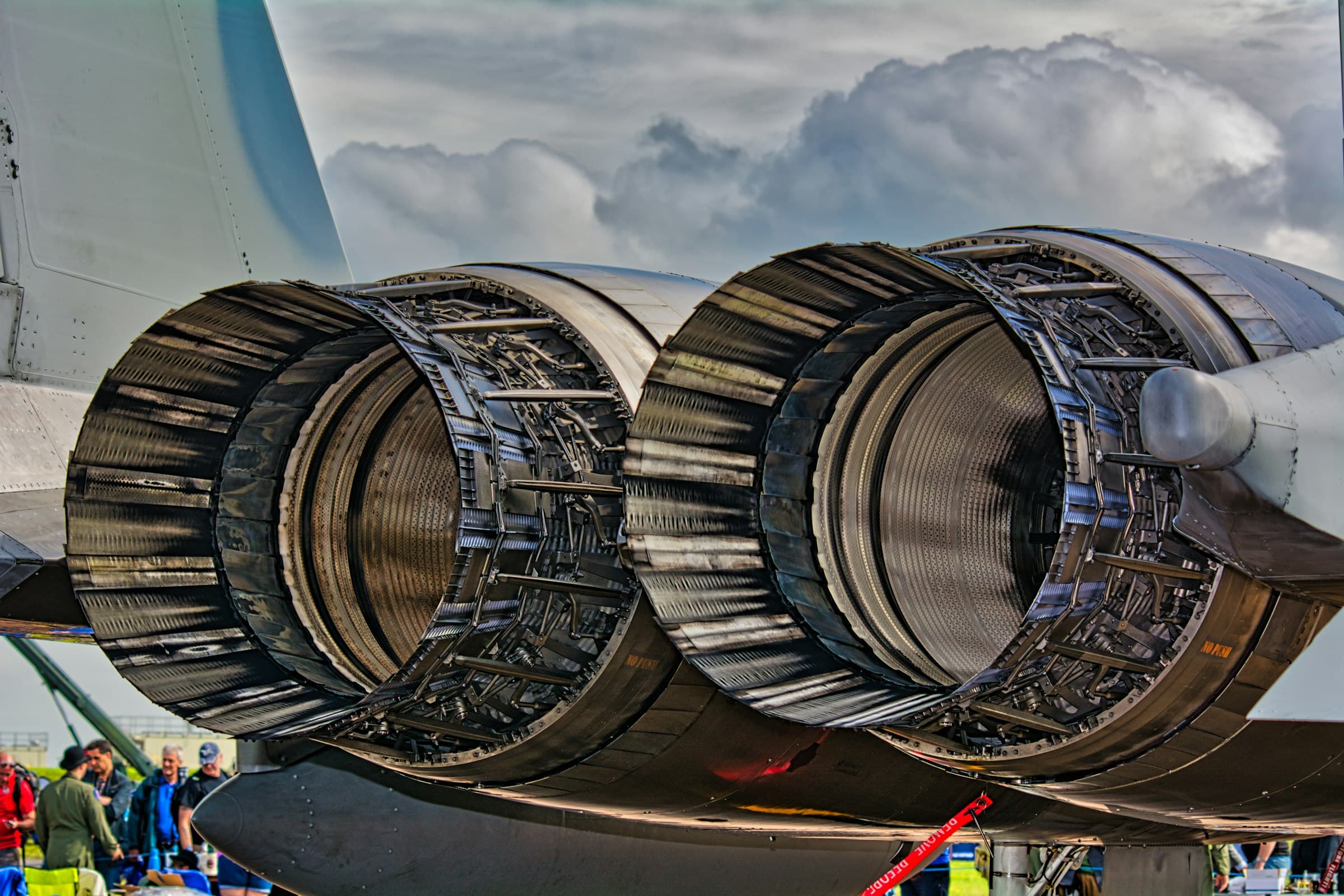
Example · Aerospace

Giving operators instant access to technical documentation

An aerospace equipment supplier with about 150 employees in the Nouvelle-Aquitaine region. Dense technical documentation (routings, assembly instructions, customer requirements) scattered across the ERP, a file server and binders. The AI assistant ingests it all; at their workstation, operators query the base in plain language and get a sourced answer, with the document and its version. Deployed in 8 weeks, existing document sources kept.

  • −65%

    time spent searching for information

  • 2 min

    to find an instruction, versus 20 min

  • 5 months

    to reach ROI

Estimated gains of €60,000 to €120,000 per year, in operator time and avoided defects.

Discuss a similar project
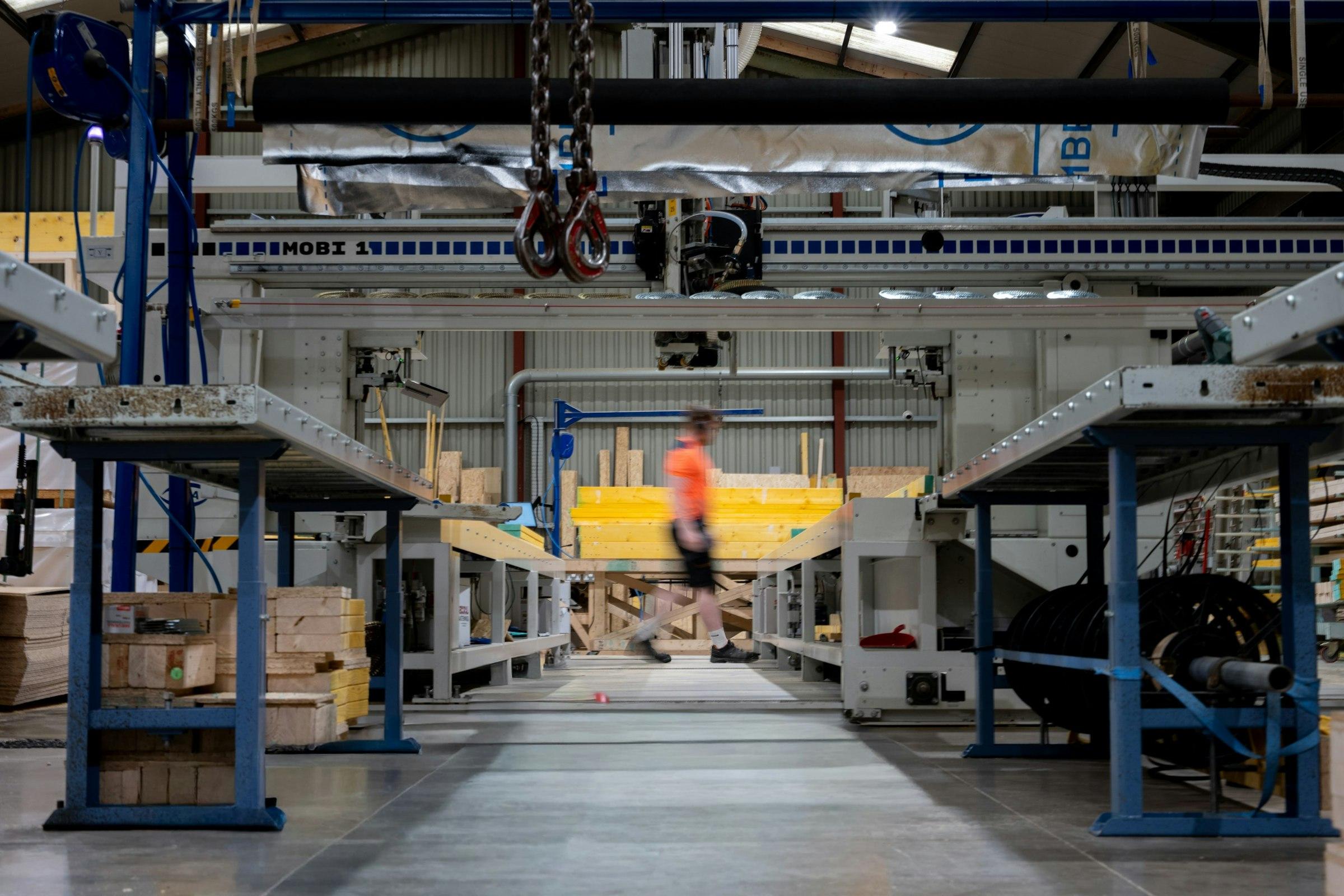
An operator walking through a manufacturing workshop

Let's discuss your AI project

The questions business leaders ask us most

What's the difference between a RAG assistant and ChatGPT?

ChatGPT answers based on what it learned from the internet. A RAG assistant answers only from your own documents: your routings, your work instructions, your machine sheets. And it cites the source of every answer, with the document and its version.

Can the AI make up a wrong answer?

The system is designed to answer only from your documents. If the information isn't there, it says it doesn't know instead of making something up. That's what makes it usable in production.

Does our documentation need to be well organized already?

No. The assistant reads your documents as they are (PDF, Word, Excel, scans), even when scattered across several servers. And along the way, we spot duplicates and outdated versions.

What happens when a procedure changes?

The base updates from your sources. The revised work instruction replaces the old one, and the assistant answers from the right version.

Who has access to which documents?

Rights are set by profile, just like in your current tools. An operator, a setter and the quality team don't necessarily see the same documents.

What gains can we expect?

At a manufacturer that runs many tests, we made more than ten years of tests and reports searchable in plain language. The time to find a comparable test was cut tenfold, and dozens of redundant tests are avoided every year.