

















USE CASE · INDUSTRY

Automated quoting: reliable quotes in minutes

Quotes in minutes instead of days

Every quote ties up your best people for hours, and the customer waits for days. AI reads the drawings, finds similar jobs in your history and proposes a pre-filled quote: your estimator validates instead of starting from scratch.

The challenge

In industrial subcontracting, the quote is the first commercial act: it wins or loses the job before production even starts. Yet it remains slow to produce, dependent on a few people and inconsistent from one file to the next.

  • 01

    Quoting ties up your best people for hours per job, even though many quotes will never turn into an order.

  • 02

    Response time has become a selection criterion: when your quote goes out in five days, the competitor who answered in 24 hours has already won the job.

  • 03

    Reliability depends on who does the quoting: margins vary from one estimator to another, and forgotten items (treatments, shipping, rework) are paid for on the job.

  • 04

    Your cost history sits idle in the ERP and Excel workbooks: every quote starts from a blank page instead of building on similar jobs already produced.

How AI solves this problem

AI reads the input documents (drawings, specifications, bills of materials), extracts the useful characteristics (dimensions, material, tolerances, quantities), finds similar jobs in your history and proposes a pre-filled quote: routing, times, material, price. The estimator validates, adjusts and sends. No more starting from scratch: they make the call.

The technical building blocks

Document extraction with vision and language models (PDF drawings, specifications, emails; CAD formats depending on scope). Similarity matching against your job history. Calculation engine configured with your rules (material, machine time, margins). Validation interface for the estimator, ERP or CRM integration. Sovereign or on-premise hosting.

The data used

Your past quotes and their outcome (won, lost, actual margin), your routings and actual production times, your material and subcontracting rates. As input, customer drawings and specifications. A few hundred historical jobs are enough to start; the richer the history, the more accurate the quoting.

Diagram of AI-automated quoting: customer drawings, AI extraction, cost history, generated quote
  1. Customer drawings

  2. AI extraction

  3. Cost history

  4. Generated quote

Expected benefits

  • Answers in hours, not days.

    Your quote goes out before your competitors': on tenders, response speed wins jobs.

  • Consistent quoting.

    The same calculation rules apply to every file: no more margin swings depending on the estimator or the day.

  • Fewer costly omissions.

    Treatments, shipping, rework: the forgotten items that eat into margin are systematically included.

  • Estimators focused on value.

    Time saved on extraction and data entry goes back into complex jobs and negotiation.

Why StratIA

  • Sovereignty.

    Your data stays in France, hosted with OVH or Scaleway, or even on-premise. Sovereign models (Mistral) when relevant. GDPR and AI Act compliance built in from the design stage.

  • French team.

    A French team dedicated to your project. Short cycles, weekly demos, continuous user validation. No offshoring, no black box.

  • Defined ROI.

    ROI is quantified from scoping, the scope is clear, go/no-go decisions are transparent. You know what you're paying and what you're gaining before you start.

They trust us

  • Accessite logo, a StratIA client
  • Hello Prépa logo, a StratIA client
  • Bastide Manutention logo, a StratIA client
  • Paymetrust logo, a StratIA client
  • Comité National Olympique et Sportif Français logo, a StratIA client
  • Union des Marchands de Biens logo, a StratIA client
  • Ordre des Géomètres-Experts logo, a StratIA client
  • BTP Ingénierie logo, a StratIA client
  • EM Lyon Business School logo, a StratIA client
  • Logo of a StratIA client
  • Fandi logo, a StratIA client
  • Caratelli logo, a StratIA client
  • Maison Colombo logo, a StratIA client
  • Colibrimm logo, a StratIA client
  • Ligue Occitanie de Tennis logo, a StratIA client
  • Disney logo, a StratIA client

Expert perspectives

“Quoting is the commercial bottleneck for subcontractors: your best technicians spend their days redoing calculations your history already knows. AI makes that history usable, and the estimator keeps the final say.”

  • Portrait of Yoan Hibert

    Yoan Hibert

    Co-founder & CEO

    Profile
  • Portrait of Baptiste Wieczorek

    Baptiste Wieczorek

    Co-founder & CTO

    Profile

Our method: learn, decide, deploy

You see the whole path from the start, and you only buy the first step. Each step has value on its own and prepares the next.

  1. Learn

    Bootcamp

    For whom: your teams first need to understand what AI changes in their work.

    One hands-on day, on site or remote, on your company's tool (Copilot, ChatGPT, Gemini, Claude), tailored to your industry and your team's level. Your teams build their first AI agents during the day and leave with the business use cases to tackle first.

    Price:
    €2,500 excl. VAT per group (up to 15 people), fundable through your OPCO (French training funds). Bootcamp+ version with follow-up of the same team over three months: €4,000 excl. VAT per group.
  2. Decide

    Bpifrance Diag Data IA

    For whom: you know AI matters, but not where to apply it first.

    A Bpifrance-accredited expert analyzes your organization and workflows, quantifies the value pools using your real numbers and gives you, for each one, the right path: do it yourselves, train a team, or deploy a tool.

    Price:
    €10,000 excl. VAT, 40% covered by Bpifrance, leaving €6,000 to pay (independent SME and mid-sized companies with 10 to 2,000 employees and at least €1M in revenue).

    Not eligible, or need something more focused? The AI audit, one day centered on your use cases, €3,000 excl. VAT.

  3. Deploy

    An AI agent on your workflow

    For whom: you want a result that runs, on the workflow that costs you the most (quotes, quality control, maintenance, documentation, reporting).

    We set up the agent on your existing tools (ERP, MES, CMMS), your teams approve its proposals, and it improves with every correction.

    Price:
    setup priced as a firm quote after the diag or the audit, then a subscription to keep it evolving.

An example

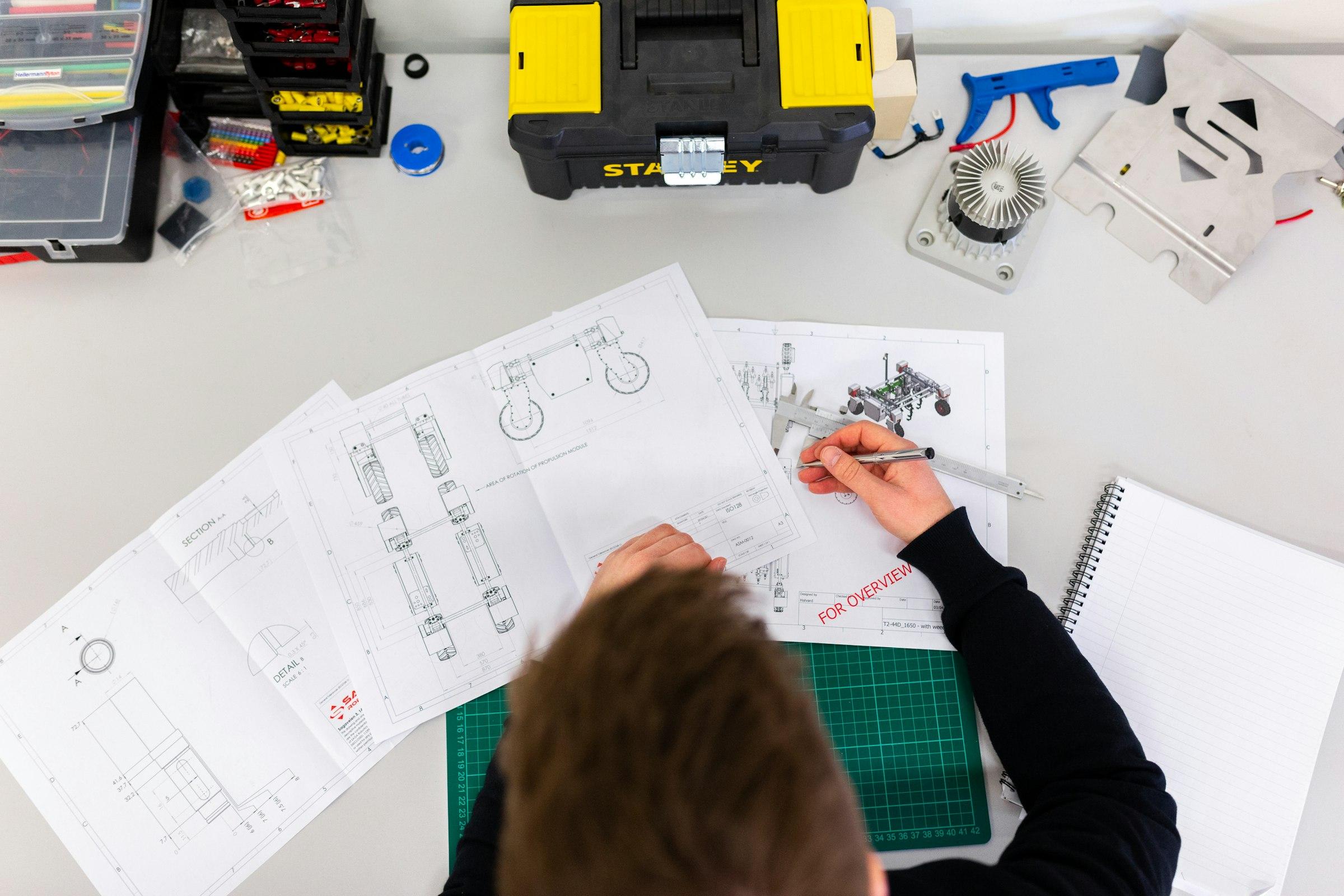
A technician marking up drawings of mechanical parts

Example · Industrial mechanics

Quoting machined parts from customer drawings

A machining and welded-fabrication subcontractor with around sixty employees in eastern France. Requests arrive by email with PDF drawings and specifications. AI extracts the characteristics (dimensions, material, tolerances, quantities), finds similar jobs already produced and pre-fills the quote: routing, times, material, price. The estimator validates and adjusts before sending. Deployed in 9 weeks, existing ERP kept.

  • 25 min

    per quote, versus half a day before

  • +23%

    more quotes issued with the same headcount

  • 6 months

    to reach ROI

Estimated gains of €80,000 to €150,000 per year, in estimator time and jobs won.

Discuss a similar project
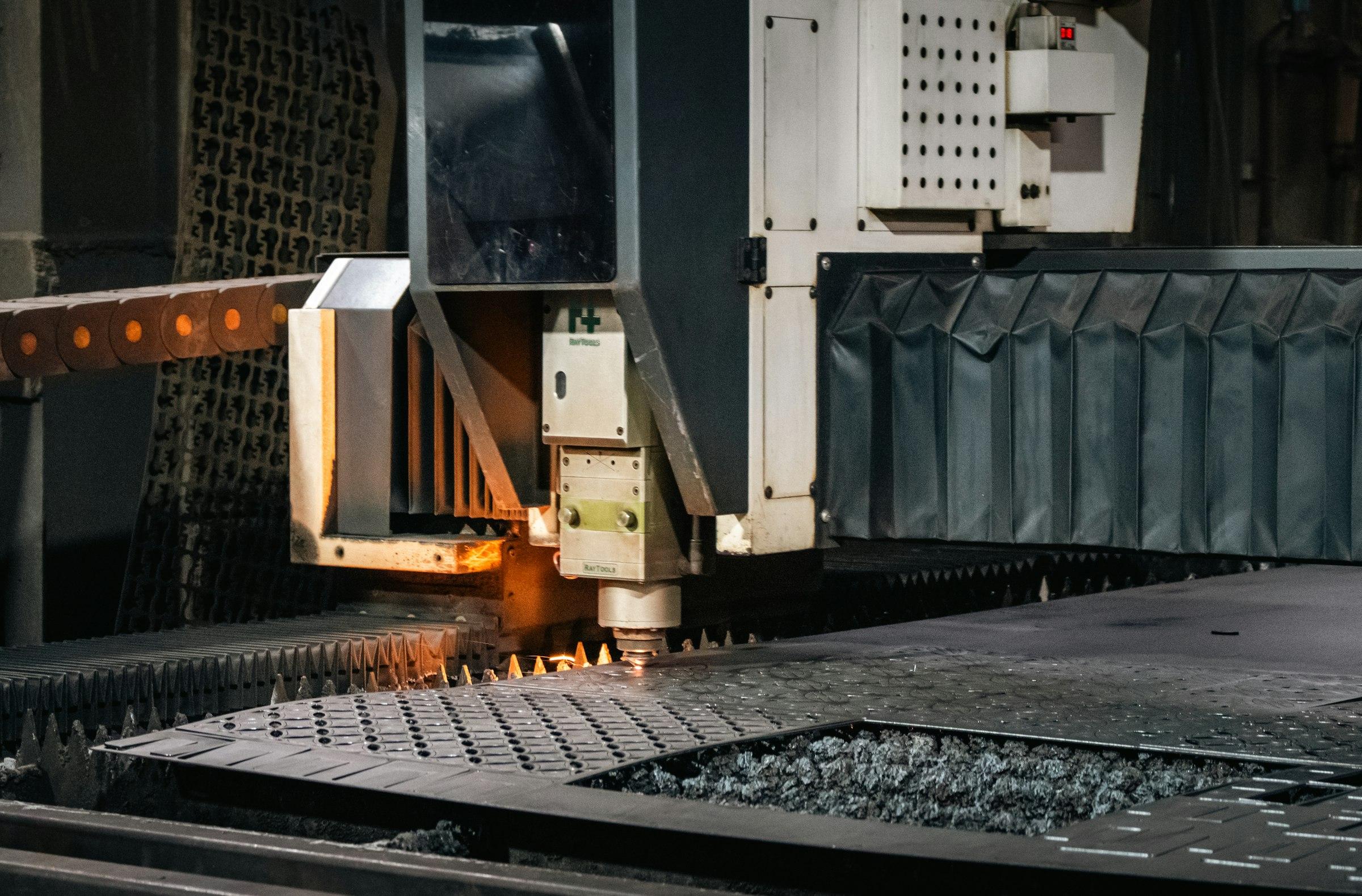
A laser cutter working on a steel sheet

Let's discuss your AI project

The questions business leaders ask us most

How long does it take to produce a quote with AI?

A technical quote goes out in one or two hours instead of several days. At our clients, the same team handles two to three times more requests, and answers tenders it used to let pass.

Which documents can the AI read?

PDF drawings, specifications, bills of materials, requests received by email, and CAD files depending on scope. When something is ambiguous, the AI flags it to the estimator instead of guessing.

Is the AI-prepared quote reliable?

It is calculated on your rules and on parts you have already quoted and produced, and your estimator always validates it before sending. Accuracy is measured from day one by comparing the AI's quotes with your team's.

Do we need a perfect quote history?

No. A few hundred jobs are enough to start, even spread across several files. And along the way, the AI often surfaces jobs quoted at a loss or underestimated times.

Does it also work for highly specific parts?

Yes. At a 300-employee manufacturer in Toulouse, every request, however specific, is compared against ten years of quotes and produced parts. The result: consistent margins on custom work, no matter who does the quoting.

What happens to the estimator's job?

No more data entry: they make the calls. The estimator reviews, adjusts and focuses on complex jobs and negotiation. And their know-how stays in the company, even when they're on leave or retire.